

 32-Channel HEVC to H.264 IP Transcoder
 32-Channel HEVC to H.264 IP Transcoder
BTR-6000V Pro V2
The BLANKOM BTR-6000V Pro V2 transcodes 32 × 1920 × 1080p50 HEVC/H.265 channels to 32 × 1920 × 1080p50 H.264/AVC channels in one unit. BLANKOM engineering confirms UDP multicast MPEG-TS SPTS input/output on all channels, with AC-3 audio passed through unchanged. The x86 CPU + GPU platform uses a 19-inch 2U chassis with hot-swappable redundant dual power supplies.
Ordering Guide
- BTR-6000V Pro V2: 32-channel 1080p50 HEVC to H.264 IP transcoder
- Channel count; input/output codecs, resolutions and frame rates
- Input/output bitrates, audio formats, pass-through and IP protocols
- Multiscreen profiles, network topology and receiver compatibility
Technical Overview
Video transcoding adapts HEVC services to existing H.264 receivers. The confirmed V2 operating point preserves 1080p50 resolution and frame rate on all 32 channels. It is a defined workload, not a claim of 32-channel 4K capacity or unrestricted performance for every combination of codecs and bitrates.
Multiscreen processing can produce several resolution and bitrate profiles from one programme. UDP unicast/multicast, RTMP, HTTP-HLS and HTTP-FLV are available for IP input and output. Channel count, codecs, resolution, frame rate, bitrates and additional output profiles must be considered together.
Four Gigabit RJ45 interfaces carry data; the HTTP Web GUI shares a data port. Input monitoring includes three-level error detection based on TR 101 290, PSI/SI checking and stream analysis. AC-3 pass-through preserves the audio format, so receiving devices must support AC-3.
At a Glance
INPUT
- AVS+, HEVC/H.265, H.264/AVC, MPEG-2 and MPEG-4 video
- UDP multicast/unicast, RTMP, HTTP-HLS and HTTP-FLV; TS/IP
- 4 × 100/1000 Mbps RJ45; input and output share the physical port set
OUTPUT
- HEVC/H.265 or H.264/AVC encoding; MPEG-TS packaging
- Confirmed V2 workload: 32 × 1080p50 HEVC → 32 × 1080p50 H.264
- UDP multicast SPTS and unchanged AC-3 pass-through on all channels
Key Features
- x86 architecture with CPU + GPU processing; multiscreen outputs
- CBR/VBR; user-defined video bitrate from 0.8 to 20 Mbps
- MPEG-1 Layer II or MPEG-2 AAC encoding; multi-audio processing and pass-through
- YUV 4:2:0 / 4:4:4; 8-bit and HEVC-only 10-bit processing
- Logo/graphic insertion and scrolling text; audio ALC
- TR 101 290-based input monitoring, PSI/SI checking and input analysis
- Scheduled reboot per transcoding channel
- 19-inch 2U chassis; hot-swappable redundant dual AC PSU
Application Examples
Retaining existing H.264 IPTV receivers
Convert incoming HEVC services to H.264 at 1080p50 for compatible televisions and set-top boxes. Plan a UDP multicast SPTS stream for each programme. If AC-3 audio is retained, verify the audio capability of every receiver type.
Hospitality, campus and enterprise headends
Adapt sources to a common receiving profile. Calculate channel output bitrates, aggregate network traffic and multicast distribution together. This is an application design example; codec support alone does not establish complete endpoint compatibility.
Multiscreen and internet delivery
Prepare several resolution profiles from one programme for phones, tablets and large screens. Select HLS, RTMP or FLV to match the target platform. Additional simultaneous profiles form part of the processing workload.
Central format conversion and operation
Adapt AVS+, MPEG-2, MPEG-4, H.264 and HEVC sources to the required output. TR 101 290-based monitoring and PSI/SI checks help investigate input faults; they do not by themselves guarantee uninterrupted service.
Capacity and Output Planning
| Engineering-confirmed V2 workload | 32 × 1920 × 1080p50 HEVC/H.265 → 32 × 1920 × 1080p50 H.264/AVC |
|---|---|
| Transport and audio on all channels | UDP multicast MPEG-TS SPTS input/output; unchanged AC-3 pass-through |
| Other HEVC operating points — Pro platform data | 1 × 2160p60 or 2 × 2160p30 or 16 × 1080p25 or 64 × 576p25 |
| Other H.264 operating points — Pro platform data | 32 × 1080p25/50 or 64 × 576p25 |
| Sizing | Operating points are alternatives, not additive simultaneous capacities. Verify the requested workload before quotation. |
Product Images
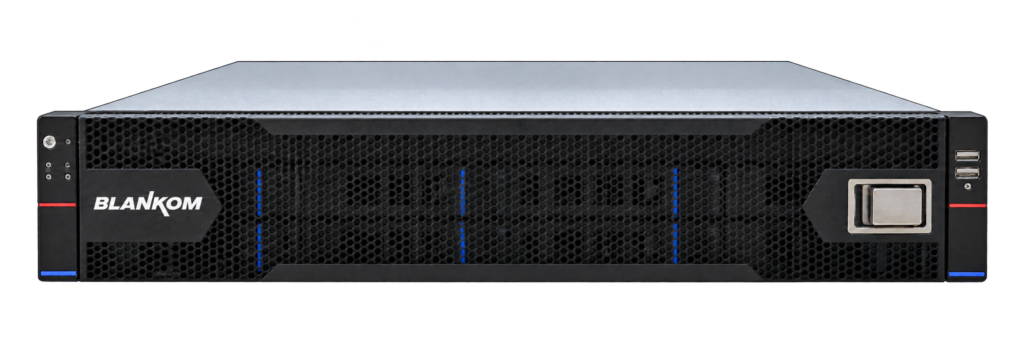
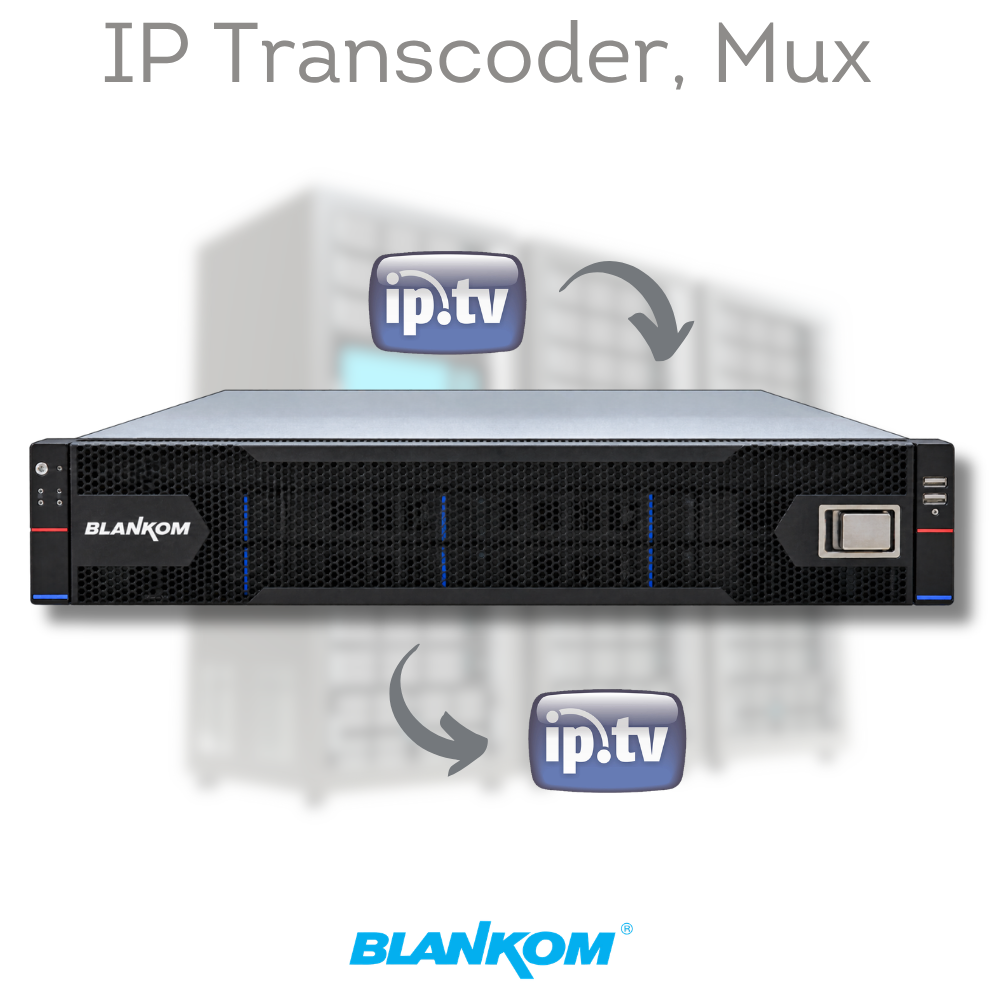
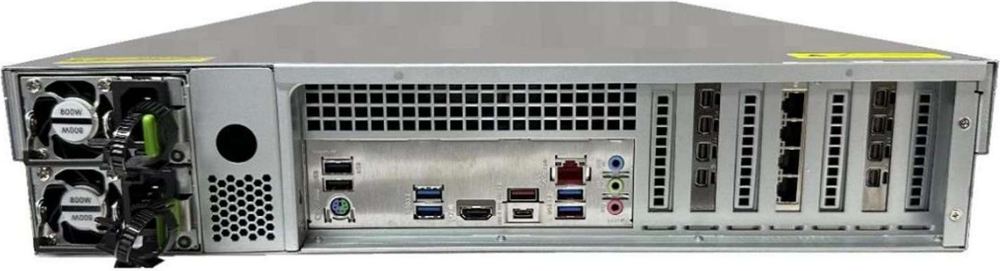
Panel photographs show an example configuration. The BTR-6000V Pro V2 rear panel is a full-option example; delivered connectors depend on the ordered configuration.
Technical Specifications
| Interfaces | 4 × RJ45, 100/1000 Mbps, full duplex; shared input/output port set |
|---|---|
| Input/output protocols | UDP multicast/unicast, RTMP, HTTP-HLS, HTTP-FLV |
| Video decoding | AVS+, H.265/HEVC, H.264/AVC, MPEG-2, MPEG-4 |
| Audio decoding | MPEG-1, MPEG-2, MPEG-4, AAC, DRA |
| Encoded video / audio | H.265/HEVC or H.264; MPEG-1 Layer II or MPEG-2 AAC; AC-3 pass-through |
| Video bitrate / control | 0.8–20 Mbps; CBR or VBR |
| Resolutions | 4K including 4096 × 2160 and 3840 × 2160, 2560 × 1440, 1920 × 1080, 1280 × 720 and lower profiles; capacity depends on workload. |
| Frame rates | Auto; 10, 15, 20, 23.97, 24, 25, 29.97, 30, 50, 60 fps |
| Chroma / bit depth | Auto, YUV 4:2:0, YUV 4:4:4; 8-bit, 10-bit for HEVC only |
| Aspect ratio | Auto, 4:3, 16:9 |
| Audio sampling | Auto, 32 / 44.1 / 48 kHz |
| Audio bitrates | 64 / 96 / 128 / 192 / 256 / 384 kbps |
| Management | HTTP Web GUI; 100/1000 Mbps RJ45 shared with a data port |
| Monitoring | TR 101 290-based three-level error detection; PSI/SI and input analysis |
| Power supply | Hot-swappable redundant dual PSU; AC 110–240 V, 6.4 A, 50–60 Hz |
| Maximum power consumption | 500 W |
| Chassis / weight | 19-inch rack, 2U; 16 kg |
| Temperature | Operation 5–45 °C; storage −10–65 °C |
Specifications are subject to change without prior notice.
Technical FAQ
What exactly does the 32-channel capacity cover?
One unit transcodes 32 × 1920 × 1080p50 HEVC/H.265 inputs to 32 × 1920 × 1080p50 H.264/AVC outputs. This operating point is confirmed by BLANKOM engineering.
Is AC-3 audio re-encoded?
In the confirmed V2 configuration, AC-3 audio passes through unchanged. This is not AC-3 encoding or conversion to another audio format. The receiver must support AC-3.
Can all channels use multicast SPTS?
Yes. UDP multicast MPEG-TS SPTS input and output are confirmed for all channels. Multicast addressing, port allocation, switching capacity and IGMP remain part of the network design.
Can it transcode 32 channels of 4K?
That capacity is not specified. The 32-channel confirmation applies to 1080p50 HEVC-to-H.264 conversion. Other 4K/HD/SD operating points are shown separately as Pro platform data and are not additive.
Is there a dedicated Ethernet management port?
The manufacturer specification states that the HTTP Web GUI control interface shares a data port. Four RJ45 data interfaces are provided; a separate management port must not be assumed.
Is SRT specified?
The current source lists UDP multicast/unicast, RTMP, HTTP-HLS and HTTP-FLV. SRT is not presented as a verified capability of this model.
Are redundant power supplies included?
The current Pro V2 specification includes hot-swappable redundant dual power supplies, a 19-inch 2U chassis and maximum 500 W consumption.
What is required for a quotation?
Provide the channel count; codecs, resolutions, frame rates and bitrates for each input/output; audio and pass-through requirements; IP protocols and multiscreen profiles.
Which bitrate controls and video bitrate range are listed?
CBR and VBR are specified, with a user-defined video bitrate range of 800 kbps to 20 Mbps. Required picture quality and aggregate network traffic determine the selected operating point.
What input-stream diagnostics are available?
The platform lists three-level error detection based on TR 101 290, PSI/SI checking and input analysis of encoding format, aspect ratio and resolution. These help operators assess the source before transcoding.